Speakers
The 3rd International Symposium on
Physical Artificial Intelligence and Robotics
Assoc. Prof. Dai Owaki
The Department of Robotics, Graduate School of Engineering, Tohoku University, Japan
Assist. Prof. Kotaro Yasui
The Frontier Research Institute for Interdisciplinary Sciences (FRIS), Tohoku University, Japan

Dr. Ryo Minegishi
Fujiwara Adaptive Motor Control RIKEN Hakubi Research Team, RIKEN, Japan

Prof. Stanislav N. Gorb
Department of the Functional Morphology and Biomechanics, Zoological Institute of the University of Kiel, Germany

Prof. Simon Sponberg
The School of Physics and the School of Biological Sciences, the Georgia Institute of Technology, USA
Keynote 6

Assoc. Prof. Noriyasu Ando
The Department of Life Engineering, Maebashi Institute of Technology, Japan

Assist. Prof. Shunsuke Shigaki
Principles of Informatics Research Division, National Institute of Informatics, Japan

Dr. Einat Couzin-Fuchs
Centre for the Advanced Study of Collective Behaviour
University of Konstanz, Germany

Bawornsak Sakulkueakulsuk
Institute of Field Robotics (FIBO), King Mongkut’s University of Technology Thonburi, Thailand

Dr. Jettanan Homchanthanakul
School of Information Science and Technology, Vidyasirimedhi Institute of Science and Technology (VISTEC), Thailand
Assoc. Prof. Dai Owaki
The Department of Robotics, Graduate School of Engineering, Tohoku University, Japan
Keynote 1
Title:
Embodied Interventions as a Window into Latent Biological Intelligence
Abstract:
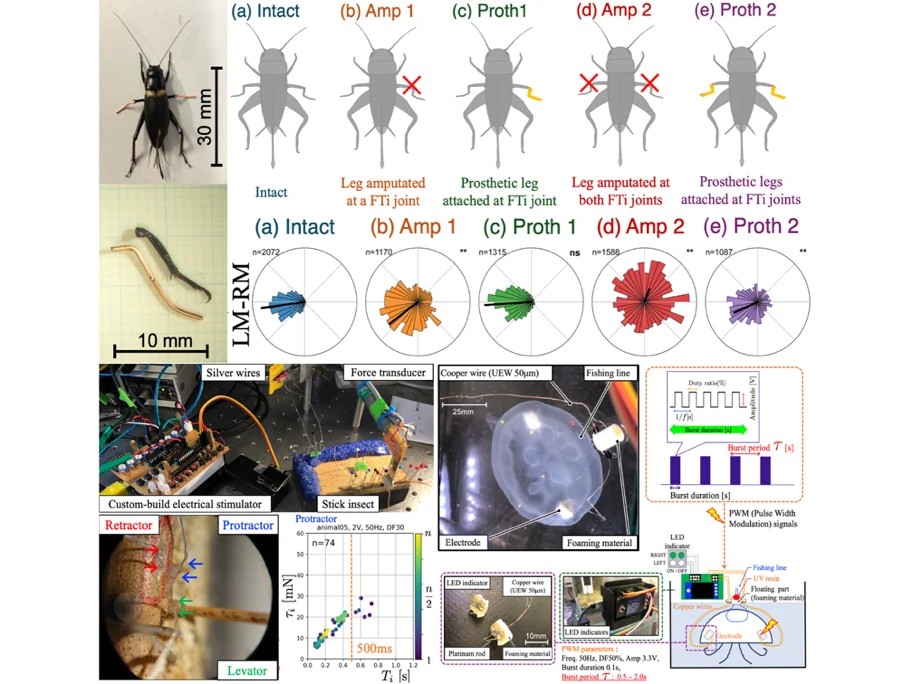
Animals possess adaptive capacities that extend far beyond those expressed under ordinary conditions. We propose that such capacities constitute a form of latent biological intelligence embedded in the physical properties of the body itself—an idea closely aligned with morphological computation. Here, we use embodied interventions to uncover this hidden adaptive potential across three biological systems. First, leg amputation and prosthetic integration in the cricket Gryllus bimaculatus reveal a covert inter-leg synchronization circuit within the thoracic ganglia, suggesting that sensory feedback normally suppresses, rather than simply generates, coordinated locomotion. Second, electrical muscle stimulation through Motion Hacking in the stick insect Carausius morosus shows that body mechanics can implement a linear and individually calibratable signal transformation, providing a measurable physical substrate for embodied intelligence. Third, jellyfish cyborg experiments in Aurelia coerulea demonstrate that the soft umbrella body exhibits self-organized criticality and operates as a physical reservoir computer capable of supporting future trajectory prediction. Together, these findings define a spectrum of embodied intelligence, ranging from a sensory “switch”, to a mechanical “amplifier”, to an embedded physical “computer”. More broadly, they establish a foundation for “Design Biology”: an engineering paradigm that seeks not merely to observe biological systems, but to actively elicit, quantify, and harness their latent adaptive intelligence.
Biography:
Dai Owaki is an Associate Professor with the Department of Robotics, Graduate School of Engineering, Tohoku University. He received the Ph.D. degree from the Department of Electrical and Communication Engineering, Graduate School of Engineering, Tohoku University, in 2009. His main research interests include Embodied intelligence, Neurorobotics, Synthetic neuro-rehabilitation, and Bio-hybrid systems. He received the Young Scientists Award, MEXT, in 2020. From April 2026, he will serve as the Principal Investigator of a Grant-in-Aid for Transformative Research Areas (B) project, “Design Biology for Ultimate Embodied Intelligence”.
Assist. Prof. Kotaro Yasui
The Frontier Research Institute for Interdisciplinary Sciences (FRIS), Tohoku University, Japan
Keynote 2
Title:
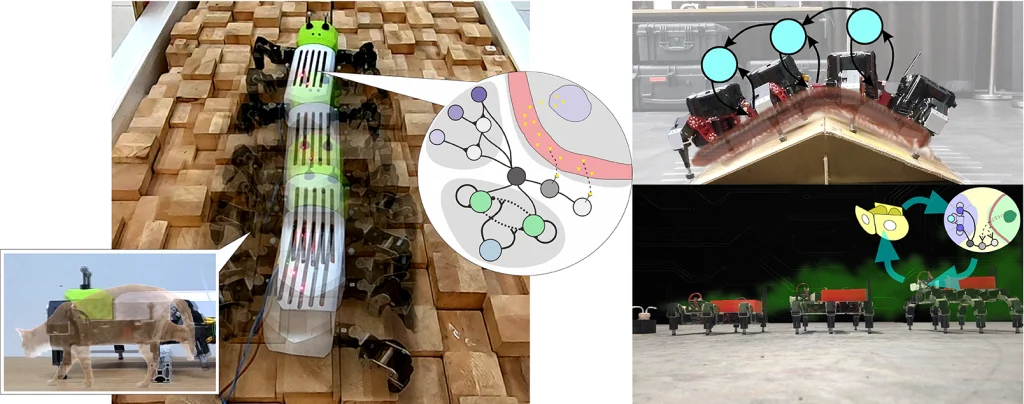
Decoding control principles for locomotor flexibility using elongated animals
Abstract:
Animals can keep moving robustly under various situational changes, such as environmental perturbations and bodily damage, by autonomously generating diverse motor strategies. Understanding the essential control principles underlying this locomotor flexibility contributes not only to deepening our biological understanding but also to establishing design principles for adaptive and resilient bio-inspired robots. In this talk, I will present our study focusing on centipedes and eels, aiming to extract such adaptive motor control mechanisms for locomotion by combining animal experiments, modeling, simulations, and robotic experiments. In particular, I would like to share findings on how locomotor flexibility can be achieved through low-level locomotor circuits (central pattern generators and sensory feedback) and descending control from the higher center (brain). Furthermore, I will introduce our recent challenge using centipedes to uncover latent adaptive capabilities in response to artificial body modifications that are unlikely to occur in nature.
Biography:
Kotaro Yasui is an Assistant Professor at the Frontier Research Institute for Interdisciplinary Sciences (FRIS), Tohoku University. He received his Ph.D. in Engineering from Tohoku University in 2020 and has since been at FRIS. His research interests lie in bio-inspired robotics and neuroethology, focusing on modeling animal motor control systems to extract the fundamental principles that enable adaptive and versatile locomotion in complex environments.

Dr. Gal Haspel
Max Planck Institute for neurobiology of behavior — Caesar, Bonn, Germany
Keynote 3
Title:
Elegantly: how does a compact circuit move a small animal?
Abstract:
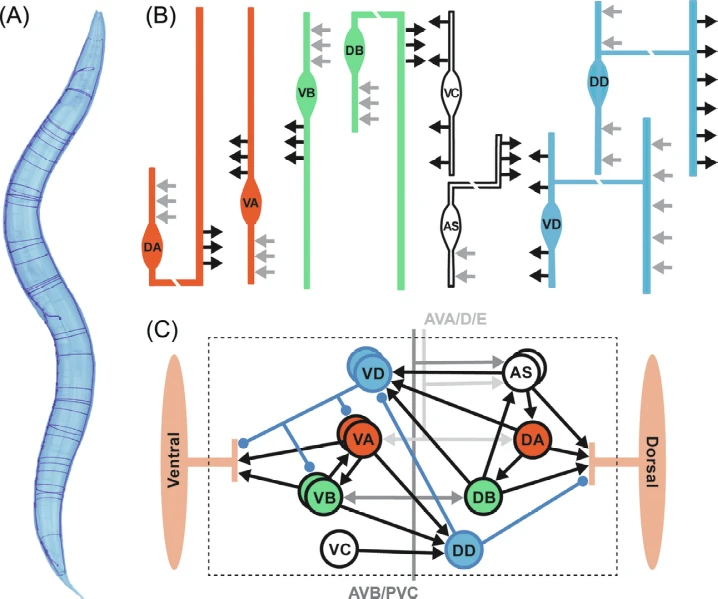
With a compact nervous system and nearly complete knowledge of its connectivity, genome, and developmental lineage, the nematode worm Caenorhabditis elegans still offers open questions about the neuronal mechanisms underlying its locomotion. The nematode undulates its rod-shaped body elegantly to move forward or backward by propagating body bends in the direction opposite to translocation. The pattern of muscle activity that underlies this motor program is a propagation of alternating differential activation of antagonistic muscles, essentially a simplified version of any other motor program for animal locomotion. Simplified, because of the small number of muscle cells, and the lack of limbs and tendons that translate muscle contraction. In C. elegans, each body wall muscle cell contributes to local bending. Moreover, the musculature is controlled by a compact nervous system. With only 302 neurons in every hermaphrodite animal (385 in the male), all named and identifiable by location and morphology, it is arguably the most comprehensively described nervous system. Of those, only 75 neurons that innervate 95 muscle cells constitute the neuromuscular system for locomotion. I will describe the locomotor behavior and the underlying neuromuscular system, summarize findings that suggest how the locomotor circuit generates the motor pattern, and offer an analogy-based framework to compare C. elegans with other animal locomotor networks.
Biography:
Gal Haspel a senior scientist at the Max Planck Institute for Neurobiology of Behavior – caesar. He studies the neurobiology of locomotion and neural resilience. He is particularly interested in understanding what makes locomotion behavior resilient to variability and changes in neurons, circuits, and the environment. His BSc degree, in 1996 at the Ben-Gurion University (Israel) was followed by a PhD in Neuroscience and Life Sciences in 2003 at the same university under the mentorship of Frederic Libersat, on the nervous -system-targeting behavior-changing sting of the parasitoid wasp Ampulex compressa and its effect on the motor output of its cockroach prey.
Dr. Ryo Minegishi
Fujiwara Adaptive Motor Control RIKEN Hakubi Research Team, RIKEN, Japan
Keynote 4
Title:
Uncovering Motor Control Mechanisms through Imaging of Muscle Activity during Walking
Abstract:
Understanding neural circuits and the characteristics of muscle activity is crucial for developing bio-inspired robots and engineering technologies aimed at augmenting biological motor capabilities. Insects, with their ability to adapt instantly to environmental changes and physical injuries, are ideal model organisms for uncovering such adaptive mechanisms.
Legged locomotion is one of the most widespread forms of terrestrial movement. Motor commands generated in the brain are relayed to downstream neural circuits closer to the motor periphery, where the detailed patterns of motor output are organized. In insects, these circuits reside in the ventral nerve cord (VNC), which serves a role analogous to that of the vertebrate spinal cord. The VNC of Drosophila melanogaster contains only about 15,000 neurons—far fewer than the number in the mammalian spinal cord. Despite its compact size, the system enables insects to generate robust and highly coordinated locomotion through the precise control of all six legs.
In Drosophila research, recent advances in electron microscopy-based connectomics, together with the release of open datasets, now allow us to formulate hypotheses or models of the functional circuits that link command and sensory inputs to motor outputs. However, the relationship between motor outputs and the activity dynamics of the muscles—the final output of the neural circuits—remains poorly understood. To address this gap, we established an experimental system for real-time imaging of muscle activity dynamics in walking flies using genetically encoded calcium indicators (GCaMP). With this system, we aim to identify functional circuit motifs by tracing the motor neurons that innervate the activity units associated with specific locomotor behaviors. This approach enables the visualization of muscle activity in vivo during locomotion and provides a framework for linking neural circuits to motor outputs.
Biography:
Ryo Minegishi is a Research Scientist in Fujiwara Adaptive Motor Control RIKEN Hakubi Research Team, RIKEN, Japan. He received his Ph.D. (Engineering) from the Department of Advanced Interdisciplinary Studies, Graduate School of Engineering, the University of Tokyo, in 2012. He subsequently held research positions at Tokyo Institute of Technology (Japan), Howard Hudges Medical Institute Janelia (the United States) and the University of Queensland (Australia) before joining RIKEN. His main research interests include neuroethology, Drosophila neurogenetics and neurorobotics, with a particular focus on the neural mechanisms of insect locomotion.
Prof. Stanislav N. Gorb
Department of the Functional Morphology and Biomechanics, Zoological Institute of the University of Kiel, Germany
Keynote 5
Title:
Learning from Nature: Biologically inspired robots
Abstract:
Bio-inspired robotics is the concept of creating robots based on the studies of biological systems. The main idea is to learn from nature and thereby develop mechanisms that are simpler and more effective than conventional technical systems. Because living beings have evolved to perform specific tasks according to their habitat, they are truly multifunctional. The bionic approach has led to the development of a special branch of robotics called “soft robotics”, which explores concepts inspired by soft-bodied organisms such as molluscs, starfish, worms, and others. Bio-inspired roboticists are also interested in implementing biomimetic sensors (f.e. inspired by the eye), actuators (inspired by muscle), or materials (inspired by various biological materials and surfaces). Since most animals have a certain type of locomotion, this lecture will present different types of locomotion in nature (walking, crawling, climbing, swimming, jumping, etc.) and example concepts of the corresponding bio-inspired robots.
Biography:
Stanislav Gorb is Professor and Director at the Zoological Institute of the Kiel University, Germany. He received his PhD degree in zoology and entomology at the Schmalhausen Institute of Zoology of the Ukrainian Academy of Sciences in Kiev (Ukraine). Gorb was a postdoctoral researcher at the University of Vienna (Austria), a research assistant at University of Jena, a group leader at the Max Planck Institutes for Developmental Biology in Tübingen and for Metals Research in Stuttgart (Germany). Gorb’s research focuses on morphology, structure, biomechanics, physiology, and evolution of surface-related functional systems in animals and plants, as well as the development of biologically inspired technological surfaces and systems. He received the Schlossmann Award in Biology and Materials Science in 1995, International Forum Design Gold Award in 2011 and Materialica “Best of” Award in 2011. In 1998, he was the BioFuture Competition winner for his works on biological attachment devices as possible sources for biomimetics. In 2018, he received Karl-Ritter-von-Frisch Medal of German Zoological Society and in 2026 the President´s Medal of the Royal Entomological Society, UK. In 2018, he received Friendship Award (China). Gorb is Corresponding member of Academy of the Science and Literature Mainz, Germany (since 2010) and Member of the National Academy of Sciences Leopoldina, Germany (since 2011). Gorb has authored several books, more than 800 papers in peer-reviewed journals, and five patents.
Prof. Simon Sponberg
The School of Physics and the School of Biological Sciences, the Georgia Institute of Technology, USA
Keynote 6
Title:
Resonance in the flapping wing flight of insects and robots
Abstract:
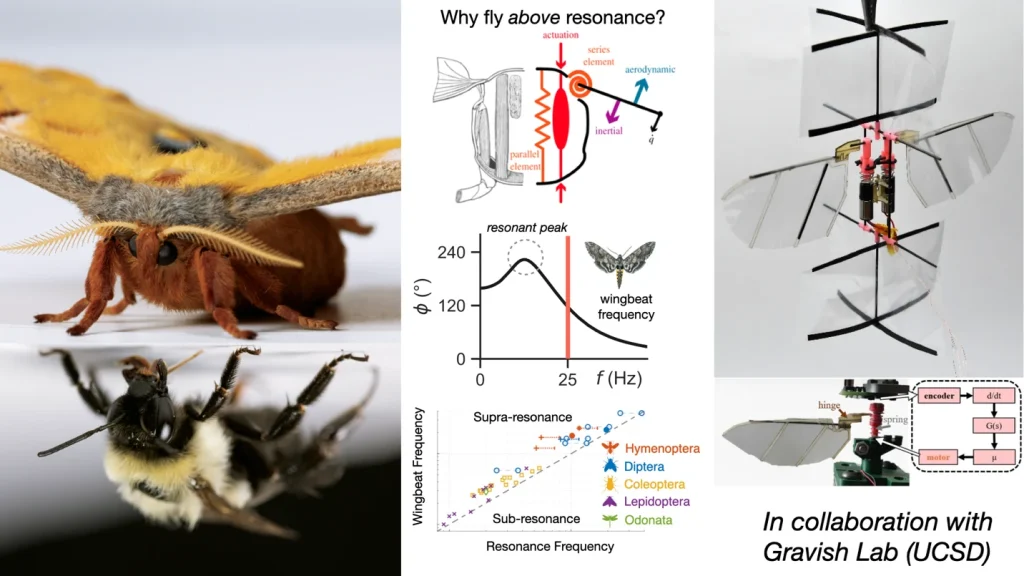
A particular frontier for bio-inspired robotics is centimeter scale locomotion, especially flapping flight. Energetic costs to fly at small body sizes are high, dynamic stability is difficult to ensure, and yet thousands of insect species achieve both power and control often with quite different wingbeat frequencies, mass, and wing morphology. In this talk, I will show how nearly all insects operate as resonant “spring-wing” systems to power flight. This reduces the inertial power costs to accelerate their wings on each stroke. But contrary to the prevailing idea that many insects must operate at their resonant frequency, we find that they are in fact supra-resonant, flapping at frequencies often well above what would seem ideal. Supra-resonance is functionally useful because rapid modulation and control of resonating wings is quite difficult. We will then explore how insects have evolved two different strategies for powering this resonant flight system using muscles that either provide periodic oscillatory forcing or use a stretch-responsive activation to set up self-excited limit cycles. While these two strategies have been known for some time, we find that they can be unified in a single dynamic systems framework that shows how major evolutionary transitions reflect transitions in dynamics. We embody this framework in a dynamically scaled robophysical flapper, where kinematics emerge from mechanics and actuation. We find that these two dynamics regimes are separated by a classic entrainment boundary but also bridged by a region of parameter space enabling smooth transitions between the two flight modes. Finally, we realize this biophysical model in the first at-scale flapping robot that can achieve self-excited oscillations and transition between the two flight modes. Limit cycle based flapping flight provides control advantages including automatic frequency and amplitude tuning to loads and intrinsic perturbation handling.
Biography:
Simon Sponberg is the Glen Robinson Professor in Complex Systems in the School of Physics and the School of Biological Sciences at the Georgia Institute of Technology (Georgia Tech). He received his B.A. in physics and biology from Lewis & Clark College and his Ph.D. in Integrative Biology from the University of California, Berkeley. Afterwards, Simon conducted postdoctoral research at the University of Washington before joining the faculty at Georgia Tech. He and his group (the Agile Systems Lab) has been exploring how neurons precisely orchestrate motor activity at the millisecond scale, how the versatility of muscle arises from the physics of billions of organized tiny molecular motors, how agile flight is powered and controlled at the centimeter scale, and how flowers blow in the wind (and what that does to the pollinators around them). He leads a Multidisciplinary University Research Initiative (MURI) bringing together neuroscientists and engineers from five universities to understand how the brains of organisms achieve fast, flexible perception and decision making in complex sensory environments. He has been the recipient of a Young Investigator Award from the International Society for Neuroethology, a Klingenstein-Simons Fellowship in the Neurosciences, and is a Hertz Fellow.
Assoc. Prof. Noriyasu Ando
The Department of Life Engineering, Maebashi Institute of Technology, Japan
Keynote 7
Title:
How do insects cope with challenging environments?
Abstract:
Insects are remarkably diverse and have adapted to various environments across the Earth. Each species has evolved a specific sensory-motor system that is closely tuned to its unique ecological niche. At the same time, insects possess an inherent capability to adapt to sudden changes in both external circumstances and internal conditions, including the loss of sensory organs or appendages for locomotion. This ability to cope with such “challenging” situations is precisely what robotics researchers seek to implement in current systems to overcome unpredictable scenarios. Here, I will present several experimental observations of this adaptability. As examples of the former (external challenges), I will discuss underground navigation in mole crickets and lift compensation in moths at high altitudes. As an example of the latter (internal changes), I will address flight stabilization in moths following the loss of equilibrium sensory input.
Biography:
Noriyasu Ando is an Associate Professor at the Department of Life Engineering, Maebashi Institute of Technology, Japan. He received his Ph.D. (Science) from the Graduate School of Biological Sciences, University of Tsukuba in 2004. Following his tenure as an Assistant Professor and Project Lecturer at the Research Center for Advanced Science and Technology, The University of Tokyo, he joined his current position in 2019. His research in neuroethology focuses on insect flight, multi-sensory navigation, odor reception, and bio-inspired odor-searching mobile robots. He is a member of the International Society for Neuroethology, the Japanese Society for Comparative Physiology and Biochemistry, the Zoological Society of Japan, and the Robotics Society of Japan.
Assist. Prof. Shunsuke Shigaki
Principles of Informatics Research Division, National Institute of Informatics, Japan
Keynote 8
Title:
Learning Adaptation from Insects: Body-State-Driven Behavioral Reconfiguration
Abstract:
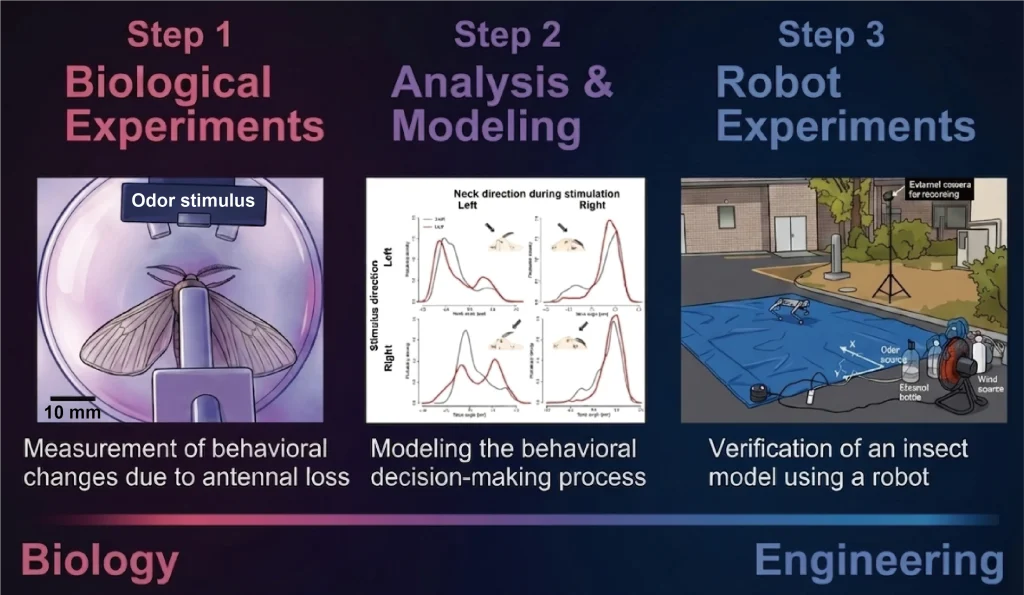
Adaptation to unexpected changes in the body is a fundamental requirement for both biological organisms and autonomous robots. Insects exhibit remarkable behavioral flexibility despite their relatively small nervous systems, making them valuable models for understanding the principles of adaptive intelligence. In this talk, I will present our recent studies on odor source localization in the silkmoth and discuss how changes in body state influence navigation behavior. By experimentally manipulating the sensory apparatus of insects, we found that they do not simply suffer a loss of performance when sensory information is reduced. Instead, they reorganize their behavioral strategies and maintain robust navigation capabilities. We interpret this phenomenon as a form of body-state-driven behavioral reconfiguration, in which the internal processing of sensory information is dynamically adjusted according to the current condition of the body. To examine the functional significance of this adaptive mechanism, we translated the observed behavioral principles into a robotic system. The resulting robot maintained navigation performance under sensor-impaired conditions, demonstrating that insect-inspired adaptive strategies can enhance robustness in autonomous systems. By learning from insects, we may uncover new design principles for resilient robots and future physical AI systems capable of operating in uncertain and dynamically changing environments.
Biography:
Shunsuke Shigaki is an Assistant Professor with the Principles of Informatics Research Division, National Institute of Informatics. He received the Ph.D. degree from the Department of Mechanical and Control Engineering, Tokyo Institute of Technology, in 2018. His research focuses on insect-inspired intelligence, olfactory navigation, embodied intelligence, and bio-hybrid systems. By integrating biological experiments, virtual reality technologies, and robotic implementations, he investigates the mechanisms of adaptive behavior in insects and develops bio-inspired autonomous systems capable of robust operation in complex real-world environments. He received the Young Scientists Award, MEXT, in 2026.
Dr. Einat Couzin-Fuchs
Centre for the Advanced Study of Collective Behaviour
University of Konstanz, Germany
Keynote 9
Title:
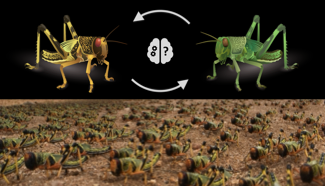
Locust swarms as a model for adaptive collective movement
Abstract:
In biological collectives, interaction rules are state-dependent sensorimotor processes implemented in nervous systems. Locusts provide an excellent model to study this implementation, as they can transition from sedentary, solitary animals that avoid each other to gregarious individuals that aggregate and participate in large-scale coordinated migrations. In this talk, I will present our neuro-behavioural work on the mechanisms that initiate collective movement in the desert locust, focusing on how sensory processing generates and modifies local interaction rules. Combining virtual reality, quantitative behavioural analysis, and neurophysiology, we ask how locusts detect nearby conspecifics, how responses to social cues change with state, and how these changes support coordinated marching. Our findings show that crowding alters sensory responsiveness, including enhanced olfactory responses in social contexts, and that gregarious locusts actively pursue visual motion cues that solitary animals can detect but do not follow. These phase-dependent changes suggest that collective migration is supported not simply by stronger attraction, but by a reconfiguration of how sensory information is translated into action. I will discuss how these findings may inspire new framworks for adaptive collective systems with flexible, state-dependent interaction rules.
Biography:
Einat Couzin-Fuchs is a Group Leader in Neurobiology at the Centre for the Advanced Study of Collective Behaviour, University of Konstanz. She investigates how sensory processing and neural circuits shape social plasticity, decision-making, and swarm dynamics in locusts. Her research also addresses olfactory processing and active sensing in insects. Trained in neuroscience at Tel Aviv University and in motor control neuroscience at Princeton University, she now combines these perspectives to study the neural computations of decision-making in individuals and groups.

Assoc. Prof. Tonia Hsieh
College of Science and Technology, Temple University, USA
Keynote 10
Title:
The role of toes for running on sand
Abstract:
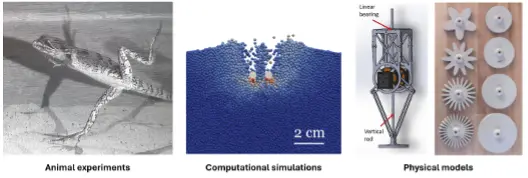
Running on sand is notoriously difficult; yet many legged animals live in sandy environments and are capable of running rapidly across these shifting surfaces. With the foot generating all propulsive forces, we seek to identify which aspects of its shape, material properties, and kinematics facilitate animals’ ability to move across such a challenging substrate. Earlier findings from our and other labs show that when there are two or more intruding objects, interaction of flow between the objects can change the behavior and force experienced by its neighbors. We have shown that maximum work is done on granular media when two toe-like cylinders are spaced 3-5 particle diameters apart. More recent results support these findings when testing more complex shapes (e.g., “flower” and “potato masher” feet) on granular media using computational simulations (discrete element methods), hopping robots, and constant speed intrusions. Preliminary results show that these complex shapes do more work on the substrates and are associated with generating larger regions of added mass than solid objects of identical surface area. This suggests that the presence of toes can serve as a low-cost biological strategy for increasing propulsive force during running on sand.
Biography:
Tonia Hsieh is an Associate Professor of Comparative Biomechanics at Temple University. Her research broadly investigates how animals respond to and recover from locomotor perturbations, including obstacle negotiation; rapid movement across unstable, complex surfaces; and limb loss. She received her A.B. in Integrative Biology from the University of California, Berkeley, and her Ph.D. in Organismal and Evolutionary Biology from Harvard University.

Dr. Daiki Wakita
Graduate School of Science, the University of Tokyo, Japan
Keynote 11
Title:
Many arms, one swimmer
Abstract:
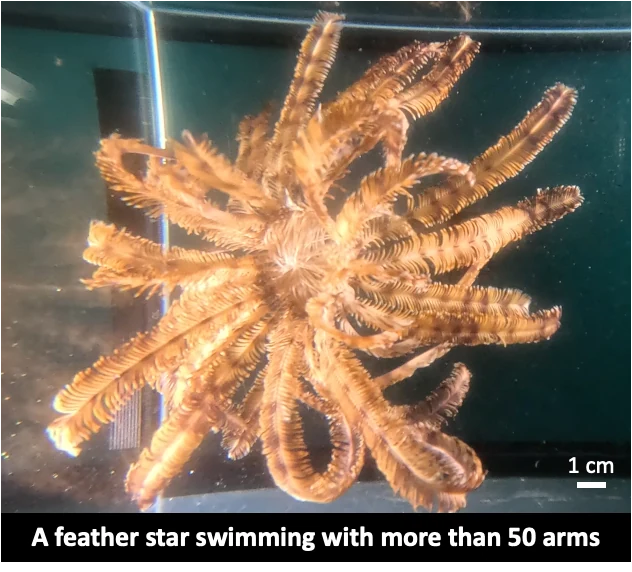
How can animals maintain coordinated locomotion while their body morphologies change? The number of legs and arms is a discrete morphological feature that can vary through development and evolution. Feather stars are marine invertebrates whose arm number drastically varies among species, increases during growth, and decreases after arm loss. Even with arm numbers ranging from 10 to more than 50, feather stars can swim using rhythmic arm movements. I quantified inter-arm coordination across eight species and found that locomotor patterns can be explained by simple local interactions among neighboring arms. My study provides a biological model of decentralized control in morphologically variable bodies and may offer design principles for modular robots that continue to function despite body reconfiguration.
Biography:
Daiki Wakita is a postdoctoral researcher at Misaki Marine Biological Station, Graduate School of Science, The University of Tokyo, Japan. He is also a Research Fellow of the Japan Society for the Promotion of Science. He received his PhD in Life Science from Hokkaido University in 2020. His research focuses on how animals coordinate variable numbers of appendages, aiming to reveal robust control mechanisms across changing body morphologies.
Bawornsak Sakulkueakulsuk
Institute of Field Robotics (FIBO), King Mongkut’s University of Technology Thonburi, Thailand
Keynote 12
Title:
Tacit Knowledge Learning in Robots: How tacit knowledge learning in human inspires robot learning
Abstract:
In human, learning tacit knowledge requires different processes from learning explicit knowledge. Through imitation and practices, animals and human learn efficient locomotion and manipulations. Adaptive Motion Prior with Constrained Optimization (AMPCO) explores a framework where we teach the robot to imitate behaviors for a task, then the robot automatically adapts its behavior to optimize a given task, separating imitation and optimization. We show how this framework guides a robot to learn tasks with efficient energy consumption and also acquires tacit knowledge outside the training dataset.
Biography:
Bawornsak Sakulkueakulsuk is a Deputy Director on Academic Affairs at the Institute of Field Robotics (FIBO), King Mongkut’s University of Technology Thonburi, Bangkok, Thailand. He received his master’s degree in Robotics Engineering from Worcester Polytechnic Institute, Massachusetts, USA. He leads a research group in Deep Reinforcement Learning in Robotics focusing on bridging how human learn to how robots learn.
Dr. Jettanan Homchanthanakul
School of Information Science and Technology, Vidyasirimedhi Institute of Science and Technology (VISTEC), Thailand
Keynote 13
Title:
Bio-inspired sensing, control, and memory for adaptive locomotion and navigation
Abstract:
Most adaptive robot controllers rely on either fast reflexes, which react only after contact or after a change is detected, or complex predictive models, which require accurate knowledge of the robot and its environment. In this talk, I will show that a much simpler alternative is possible: combining a fast reflex with a lightweight, embedded memory or regulatory process lets a robot adapt continuously to changing conditions, without needing any such model. Three instances of this design on a hexapod robot are presented, built from two biologically-inspired mechanisms — an artificial hormone system and a temporal memory. The hormone mechanism lets each leg continuously adjust its height on uneven terrain and, applied to the robot’s sensors instead of its legs, adaptively adjusts sniffing height and airflow to track an odor source. The neural memory carries obstacle information from a front leg to the hind legs, letting them proactively step over an obstacle before making contact with it. In each case, combining reflexive and memory-driven control improves stability, accuracy, and energy efficiency compared to reflex alone, while keeping the control architecture simple and model-free. Taken together, these results show that the same sensing-control-memory principle applies consistently across leg coordination, obstacle negotiation, and odor tracking — offering a practical basis for adaptive robot behavior.
Biography:
Jettanan Homchanthanakul is a postdoctoral researcher at the School of Information Science and Technology (IST), Vidyasirimedhi Institute of Science and Technology (VISTEC), Thailand. He received his Ph.D. in Information Science and Technology from VISTEC in 2023, during which he conducted research at University Medical Center Göttingen, Germany, as a Srimedhi Scholar under Her Royal Highness Princess Maha Chakri Sirindhorn. His research focuses on bio-inspired adaptive control, artificial hormone systems, and embodied sensing for multi-legged robots operating and navigating in complex, unpredictable environments.